The rapid growth of data centers drives a significant rise in electricity demand and reshapes the power generation landscape, prompting new market entrants.
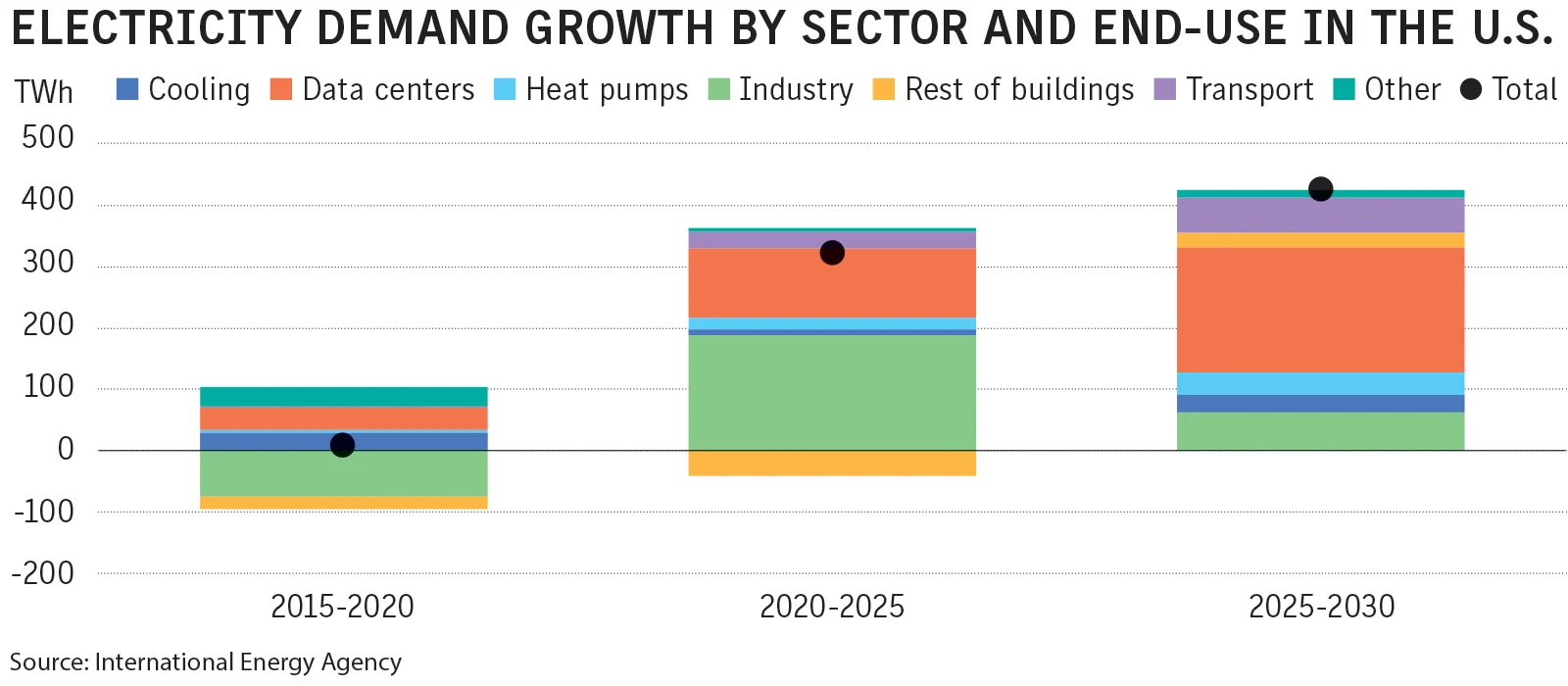
The escalating need for electricity, primarily driven by the expansion of data centers, is reshaping the U.S. power generation sector. With utilities racing to enhance capacity, we’re seeing a substantial wave of infrastructure investments, marking one of the largest cycles in decades.
Rebecca McCabe, the U.S. power and renewables leader for Aon, emphasizes that this surge in demand is introducing a variety of new players into the market. “We’re witnessing clients who are newer to producing power and may not fully grasp the associated risks nor the insurance requirements,” McCabe stated. This vacuum of experience among newcomers has started to foster an influx of entrants into the space.
Growth in this sector has reached unprecedented levels, according to Katie Burke, Marsh Risk’s U.S. specialty energy and power growth leader. She notes, “The amount of traffic we’re encountering is enormous.” Traditional stakeholders like utility companies are increasingly joined by technology firms and hyperscalers—large-scale data operators effectively becoming participants in power generation.
New Partnerships and Risk Considerations
This transformation prompts a shift in risk management practices. Stakeholders now realize the necessity of involving risk advisory services earlier in project planning. Burke accentuates the importance of having risk engineers on-site to understand the intricacies of projects. “The power practice is collaborating closely with construction teams to assess the unique construction risks associated with data centers,” she explains.
Partnerships between tech companies and utility providers are evolving, with financial entities such as private equity firms and banks also coming into the fold. Austin Larkin of FM highlights this trend, stating, “All of those groups are uniting; it’s a significant change.” The consultative nature of these relationships is proving beneficial for project execution.
Katherine Gerber, head of energy and transition in the Americas for Axa XL, emphasizes the value of early engagement with insurance and risk engineering teams. “We advise clients to involve insurers and risk engineering experts at the outset, even before discussions with lenders begin,” she noted, underlining the growing complexity of power generation projects.
The increase in retail electricity demand, reported at 2% year-on-year in 2025 and an 8% rise over the last decade, underscores the vital role data centers play in driving U.S. power needs. Gerber further mentions a surge in submissions focused on data center development, with a corresponding demand for higher insurance limits due to the magnitude of these projects.
Challenges in Equipment Procurement and Risk Management
Power generation facilities face unique challenges, particularly regarding the procurement of specialized equipment with long lead times, which can heighten project risks. Tyler Ahrenhold from MSIG USA points out that critical equipment items, such as gas turbines and transformers, have become increasingly expensive amidst supply chain constrictions.
Long wait times for essential components are common, with some equipment taking years to deliver. This can significantly impact project timelines if equipment is delayed, damaged, or defective, leading to costly operational setbacks. Larkin mentions that these delays can complicate a project’s risk profile, particularly as the business interruption values are steepening alongside procurement costs.
Understanding equipment lead times is crucial in assessing a project’s risk profile, according to Ahrenhold. “It’s essential to know the availability of spare parts on-site and how those items are stored and secured," he stated. If a critical piece of equipment fails during construction and a spare isn’t available, the resulting claim can be extensive.
Supply chain vulnerabilities are becoming increasingly significant for clients, as observed by McCabe. Data center operators are acutely affected by these constraints, prompting a careful evaluation of supply chain risks. Aon employs a diagnostic tool to assist clients in navigating the financial implications of these potential delays.
Future Outlook for Power Generation and Insurance Needs
As the industry adjusts to rising electricity demands, there will likely be an increasing reliance on specialized underwriting practices that can adapt to new technologies and associated risks. Ahrenhold anticipates that collaborative pre-submission discussions will become nearly essential, streamlining the underwriting process and enhancing project feasibility.
The increased emphasis on risk management—spanning early engagement with advisory services to proactive planning around equipment procurement—will be vital as this sector evolves. The intersection of technology, finance, and construction in power generation not only presents challenges but also offers opportunities for improved collaboration and innovation in risk management strategies.
This ongoing dialogue among stakeholders is imperative for navigating complexities in the sector, ensuring that everyone from technology giants to traditional utilities maintains sustainable and profitable operations. The attention to detail and improved cooperation is indicative of a maturing industry, keen to meet the energy demands of the future while effectively managing associated risks.
Discussion
Sign in to join the discussion.