The parametric insurance sector is expanding rapidly, driven by better data access and a growing need for quick, reliable payouts after disasters.
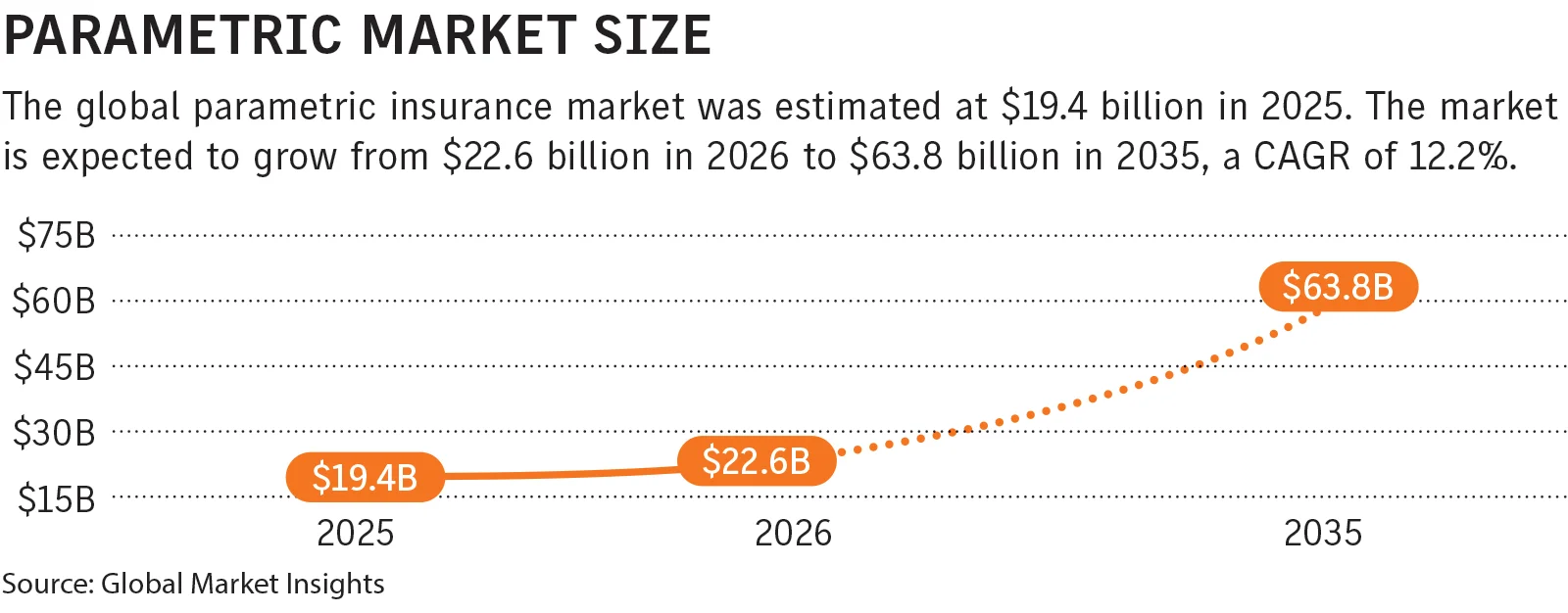
Parametric insurance is gaining traction as advancements in technology and access to credible data facilitate coverage for a wider range of operational disruptions and catastrophe risks. This growth signifies an important shift in how businesses approach risk management.
Data Integrity: The Cornerstone of Parametric Insurance
The functionality of parametric insurance rests on accurate, objective data, which is essential for triggering payouts. As highlighted by industry experts, ensuring the integrity of the data sources used is non-negotiable, especially since these policies depend on measurable events like wind speed or rainfall—a shift away from traditional loss adjustments.
Recent incidents in various sectors highlight the vulnerabilities associated with weather data reliability. For instance, in April 2024, French authorities began an investigation into a suspected manipulation of a weather sensor at Charles de Gaulle Airport, which had implications for temperature-based betting markets. Such occurrences underline the importance of maintaining rigorous standards for data accuracy within the insurance industry.
Furthermore, cases like that of two Colorado farmers, who were sentenced to federal prison for tampering with rain gauges to inflate crop insurance claims, illustrate the stakes involved in data integrity. As noted by Aon's Michael Gruetzmacher, the foundation of parametric cover relies heavily on trustworthy data sources.
Reliable Independent Data Sources
Independent data providers are crucial for effectively deploying parametric insurance. Both insurers and policyholders must rely on data that is free from conflicts of interest. As Megan Linkin of Swiss Re points out, established organizations such as the United States Geological Survey (USGS) and the National Hurricane Center have built a reputation for providing dependable data.
For example, the HWind forecasting tool collects satellite data, ground observations, and reconnaissance flights, while USGS utilizes seismographs and computational models in its ShakeMap system. This multi-source data approach enhances robustness and reduces the potential for manipulation, as explained by Linkin.
Advanced Verification Mechanisms and Future Data Utilization
Parametric insurance contracts are equipped with verification mechanisms to ensure that the data triggering payouts meets high standards of integrity. According to Claire Wilkinson of Willis Towers Watson, if an anomalous reading is detected from a weather station, the calculation agent will cross-reference this with nearby stations and other independent data sources before confirming a trigger event.
As insurers gain access to more sophisticated datasets, they are beginning to integrate additional data sources, such as shipping records and governmental advisories, while weather-related information remains a primary focus. This is part of a trend toward addressing more nuanced risks, with parametric solutions being developed for complex perils like flooding and severe weather events—areas that represent significant growth potential, according to Liberty Mutual's Virgile Salmon.
The Advantages of Parametric Coverage
Despite a cooling property insurance market, demand for parametric insurance is on the rise due to its unique advantages, including streamlined payout processes and expansive coverage options. With projections indicating the parametric insurance market could reach $63.8 billion by 2035—a compound annual growth rate of 12.2%—the sector continues to catch the attention of business owners looking for reliable risk management solutions.
As Claire Wilkinson points out, even with property insurance pricing easing, many buyers still find value in parametric insurance as a complementary solution rather than merely a replacement. The appeal lies in knowing ahead of time what the payout will be once an agreed-upon event occurs, eliminating lengthy claims processes commonly associated with traditional insurance claims.
Moreover, parametric solutions can be tailored to fit various operational needs, such as business interruption coverage based on metrics like canceled flights or revenue fluctuations. For example, recent developments have seen the introduction of parametric coverage for data center service-level agreement breaches, where payouts correspond to specific operational thresholds.
Expanding Coverage for Emerging Risks
Insurers are increasingly expanding parametric coverage to include financial losses from extreme temperatures, which impact business operations directly. According to experts, excessive heat can limit working hours on construction projects due to safety regulations, compelling businesses to seek alternative coverages amid rising operational costs.
Moreover, insurers are looking at supply chain risks, with offerings designed to provide liquidity when natural disasters impact critical infrastructure. For instance, businesses reliant on ports, such as the Port of Long Beach, may opt for coverage triggered by earthquakes that could disrupt operations and increase costs. Whereas conventional property coverage focuses on physical damages, parametric policies address contingent risks and can facilitate operations during disruptions.
Looking Ahead
The increasing complexity of risks in today’s operational environment indicates a notable shift toward parametric insurance solutions. With enhanced data accuracy and a greater understanding of how to effectively manage emerging risks, this segment of the insurance market is positioned for continued expansion, offering businesses the agility they need to navigate uncertainty.
Discussion
Sign in to join the discussion.