House House’s Big Walk makes getting lost in the dark a test of communication—and a reminder of what playing with friends brings.
Trust is part of the puzzle
Big Walk’s most unsettling moments come from losing the people you’re playing with. House House’s co-op adventure can gather as many as 12 friends for puzzles and aimless wandering, then leave one player alone in the pitch black with no quick way back. That shift gives its goofy excursions an emotional edge: the real challenge is staying connected. The game’s unease comes from a social bond being interrupted, not from a threat the group can simply defeat.
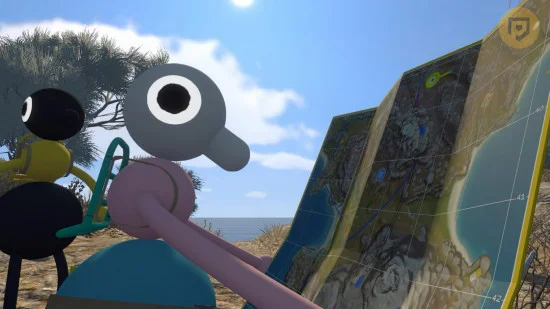
The game sends groups across an outback wilderness guided by a map whose landmarks offer few certainties. Players work out how to overcome increasingly complex obstacles, often through trial, conversation and the occasional disagreement. That uncertainty gives the map a particular role: it’s a prompt for discussion, rather than a reliable answer sheet. The design leaves room for sudden breakthroughs, but it also asks players to rely on one another rather than expect constant direction.
That reliance changes what counts as progress. A group might advance because someone spots a useful detail, or because the players finally agree on what to try. Similar co-op systems often make communication a tool for coordination; Big Walk’s setup gives it a more personal weight, since a missed explanation can leave someone behind. If you’re working in this space, that’s a useful distinction: cooperation can be the subject of a game as much as its method.
That social texture feels familiar. Friends trade jokes and catch up, then bicker over small things—in one group’s case, movie opinions. Those exchanges become part of the puzzle-solving, giving the journey its own rhythm beyond figuring out what a contraption does. The conversation doesn’t need to be efficient to matter. Sometimes the detour is the point.
Darkness changes the mood
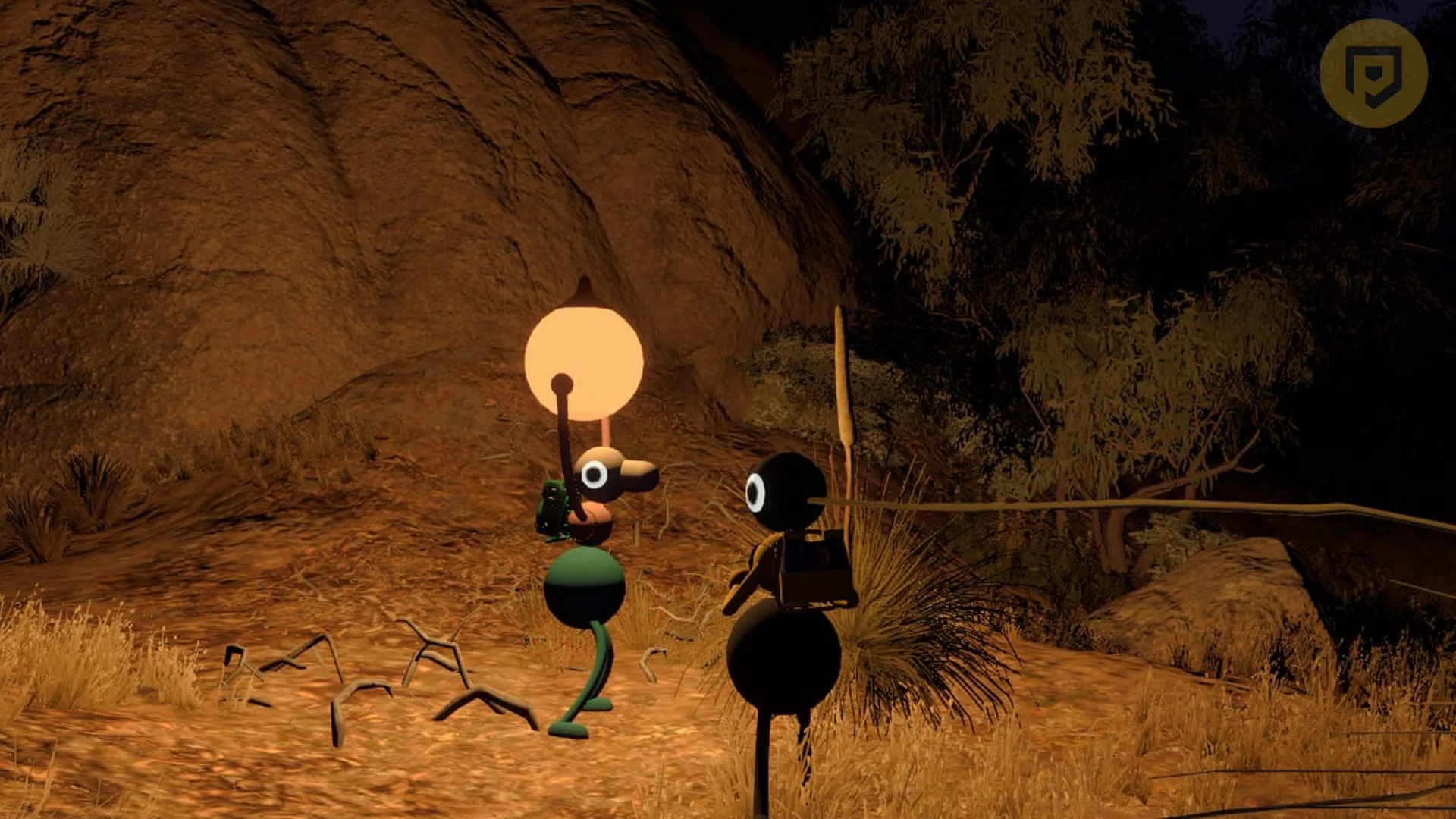
Big Walk has a survival streak beneath its playful surface. When night falls, players can lose sight of their group. A torch, laser or noisy instrument might help draw attention, but those tools aren’t always available. Sometimes all that’s left is waving your arms and calling into the dark. The shift works because it takes away the conveniences that make group play feel dependable, leaving players to improvise with whatever they can still do.
One moment, the group is laughing and kicking around oversized lamps; the next, a missing lamp has left players scattered. The contrast makes the darkness feel like a change in the rules, not just a change in lighting. The surroundings may be familiar, but without a visible route or a clear view of companions, that familiarity stops being useful. And yet, the danger remains modest: the tension is in not knowing where everyone is or how soon the group will reconnect.
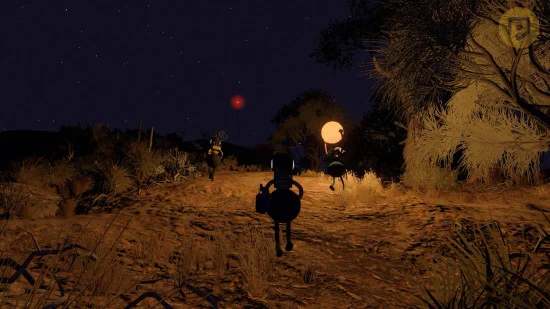
There are no instant respawns or fast travel points to smooth over the separation. That choice makes distance matter. A player who gets lost has to sit with the gap between them and the rest of the group, while the others have to decide how to respond. The result is a stretch of uncertainty, with only the sounds of nature for company. A small inconvenience with a long shadow.
What the game leaves with you
Being stranded gives the player time to think about communication. After hours of chatting and solving problems together, losing that easy connection feels like its own kind of fear. The game’s tension comes from the absence of company, not from a monster or a villain. That’s a more understated source of suspense, and it depends on players caring about the group before the game separates them.
That makes its quieter diversions count. Some challenges aren’t conventional puzzles at all; House House also makes space for simply spending time together, whether that means sitting on a couch, listening to music or talking for five minutes. Those moments give the adventure room to breathe and make its social premise feel lived in, rather than like a series of tasks with voice chat attached. (And this is the part most people overlook.) The calm stretches help explain why separation can feel so sharp.
As Robert De Niro’s character says in Heat, “I'm alone, I am not lonely.” In Big Walk, the prospect of finding your friends again gives the solitude a limit. It’s a pointed contrast: being alone can be peaceful when it’s chosen, but unsettling when it arrives without warning and cuts off the people you’ve been relying on.
Why the shared story matters
The puzzles and odd contraptions bring the group together, but the company is what makes the journey memorable. Getting lost in the dark is frightening; getting lost while your friends argue about which way to go turns that fear into a story you can share. The game’s strongest material seems to come from that overlap between designed challenge and unscripted reaction. The group supplies the jokes, misunderstandings and small acts of help that make a familiar co-op structure feel personal.
Here’s the thing: Big Walk’s social design also asks players to accept periods of confusion. A group that expects clear instructions or constant forward motion may find the wandering and uncertainty frustrating. But for friends willing to talk, disagree and wait for one another, those pauses can carry more meaning than a cleanly solved puzzle. The numbers here are underwhelming only if success is measured by efficiency.
What this means for you is that the game’s appeal will depend less on how quickly your group solves problems than on whether you enjoy being together while you solve them. That’s a modest but confident idea. Big Walk treats friendship as the connective tissue of the adventure—and occasionally makes the player feel its absence.

Discussion
Sign in to join the discussion.