GTA 2’s gang politics and unpredictable streets reveal an early blueprint for the series, even as its camera and punishing progression feel dated.
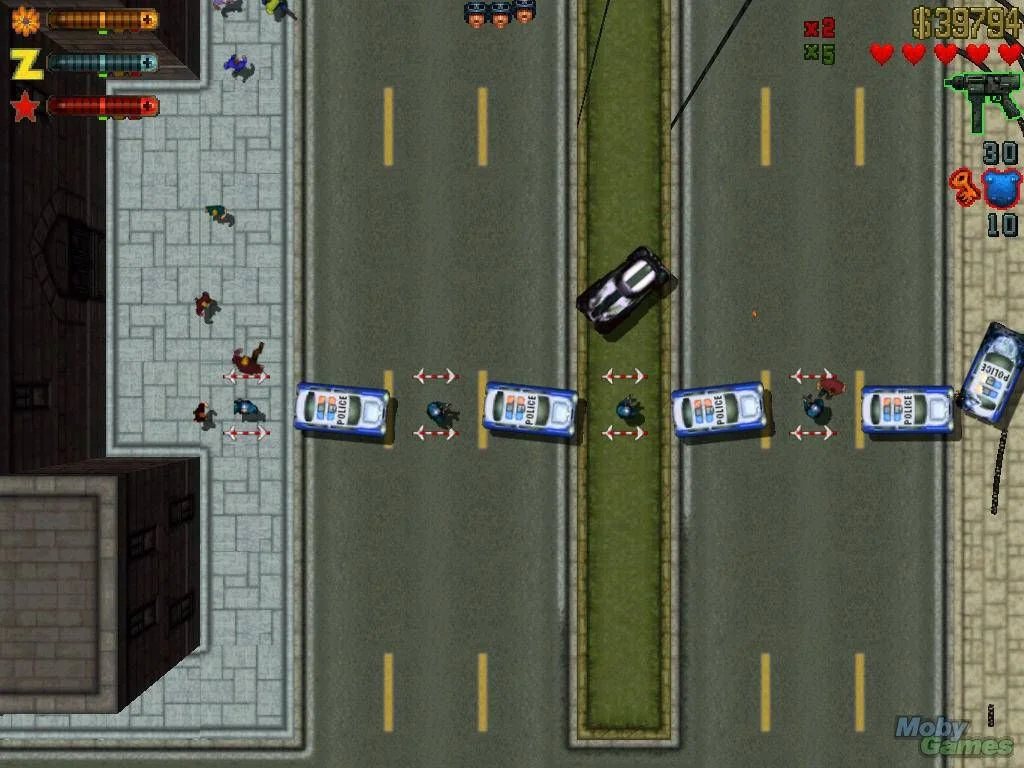
GTA 2 is less a preview of GTA 6’s technology than an early sketch of the design instincts that still define Grand Theft Auto: give players a city with competing interests, then let their choices turn routine jobs into trouble. Its overhead camera and punishing progression haven’t aged as well. But Anywhere City’s gang politics, reactive streets and appetite for disruption help explain how the series built its signature rhythm.
With GTA 6 approaching, revisiting Rockstar’s 1999 entry offers a useful view of what the franchise carried forward and what it left behind. The visual gulf between the games is enormous. The connective tissue lies in how missions, exploration and player mischief collide.
Anywhere City makes ambiguity part of its identity
The city’s name sounds generic, but its atmosphere is unusually specific. Players and fans have placed the game anywhere from 1999 to 2013, a range encouraged by the deliberate uncertainty in its sources. Its design mixes recognizable urban details with futuristic touches, making the setting feel both accessible and difficult to pin to a particular moment.
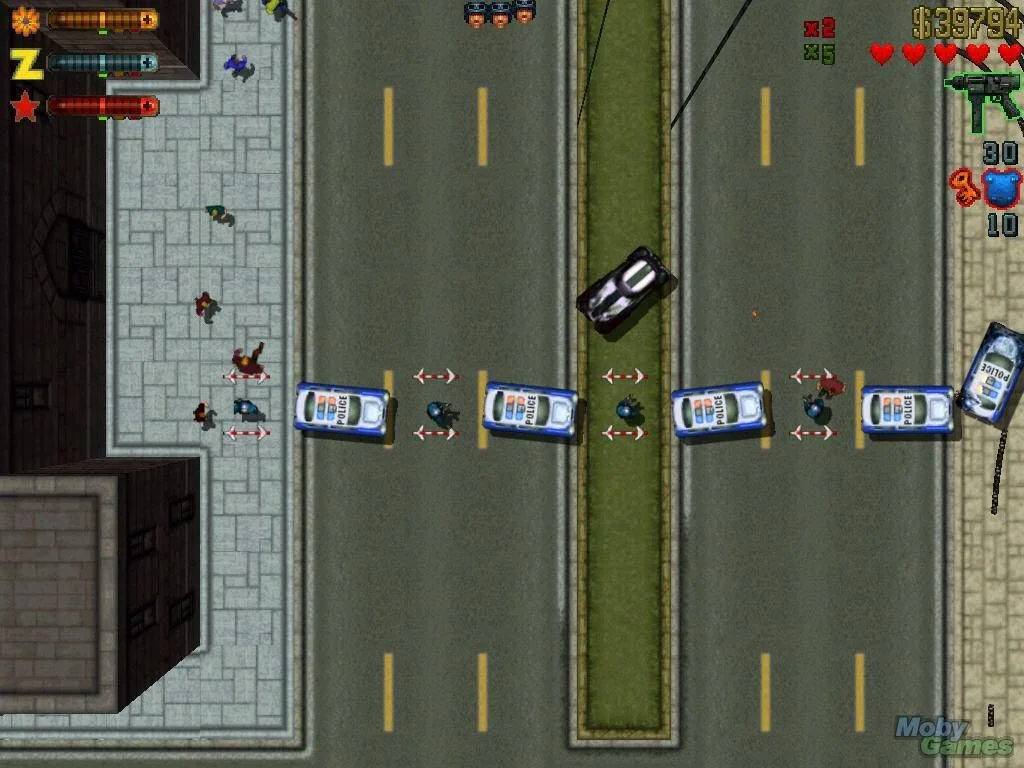
The original manual describes a city buckling under corporate indifference and criminal exploitation. Those forces aren’t just background color: they shape the jobs players take and the factions they work for. Different districts have their own visual character, while missions are spread across the city, giving travel a sense of movement through distinct places rather than a single uniform map.
That setup matters because Anywhere City is built to keep the player busy. The jobs pull you across its streets, but the journey between objectives can become as memorable as the objectives themselves. GTA 2 regularly turns a simple plan into an improvised scramble, a quality that later entries expanded with more detailed worlds and systems.
Gang respect turns work into a choice
The Gang Respect system gives the city a social structure with consequences. Helping one faction can close off work from its rivals, affecting both a player’s options and their earning potential. Yet choosing sides also makes the streets more volatile: rival gang members can turn up in the middle of an otherwise ordinary trip, and faction jobs can escalate into open conflict.
A mission to interrogate an enemy gang member captures the game’s taste for sharp turns. First, you pick up the target and drive him toward a gang headquarters. Along the way, frightening pedestrians can raise your multiplier and improve the potential payout. What looks like a basic transport job already has several moving parts: the fare depends on what you’ve done before, and the next step brings a grim delivery request.
The job asks you to take the vehicle, passenger included, to a nearby car crusher. Then a bad turn into a police car can transform the assignment into a chase. You may lose your money and fail to finish cleanly, but come away with a more vivid memory than another uneventful trip from point A to point B. That tension between objective and incident is a lasting part of the series’ appeal.
Missions range from illegal deliveries and robberies to a gang war that requires stealing a van, collecting reinforcements and driving into a shootout. There’s variety, though not enough to erase repetition for every player. The more interesting design choice is the tradeoff: work for one gang, and you gain access to its jobs while potentially creating new trouble with its enemies. Progression and street-level chaos feed into each other.
The city answers back
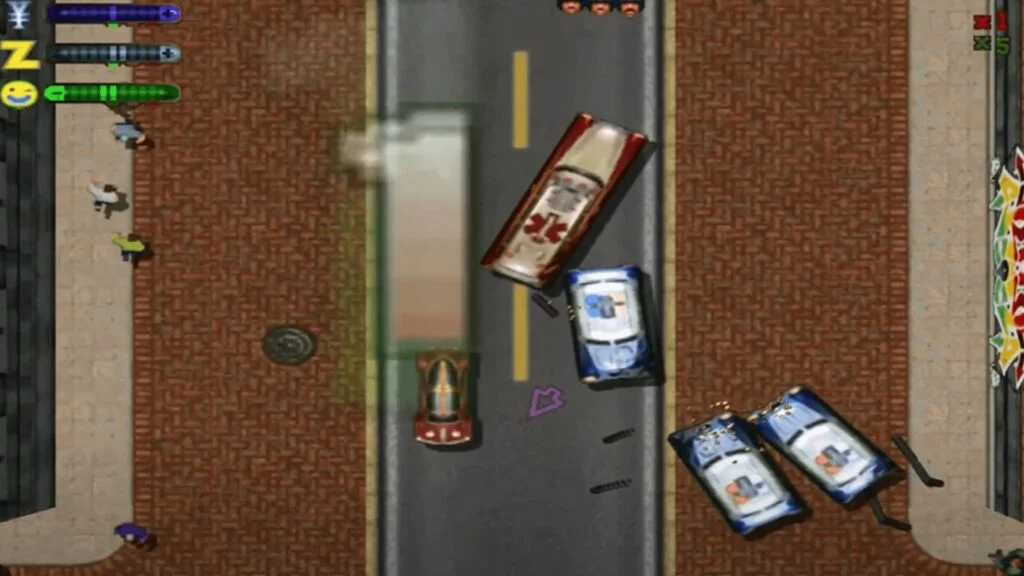
GTA 2’s chaos isn’t limited to scripted missions. Traffic can snarl after a collision, drivers and pedestrians can become part of the disturbance, and a carjacking can attract either gang members or the police. Even a vehicle you only meant to borrow can derail a carefully planned route. The game rewards some of this disorder with a cash multiplier, making disruption part of its economic loop as well as its mood.
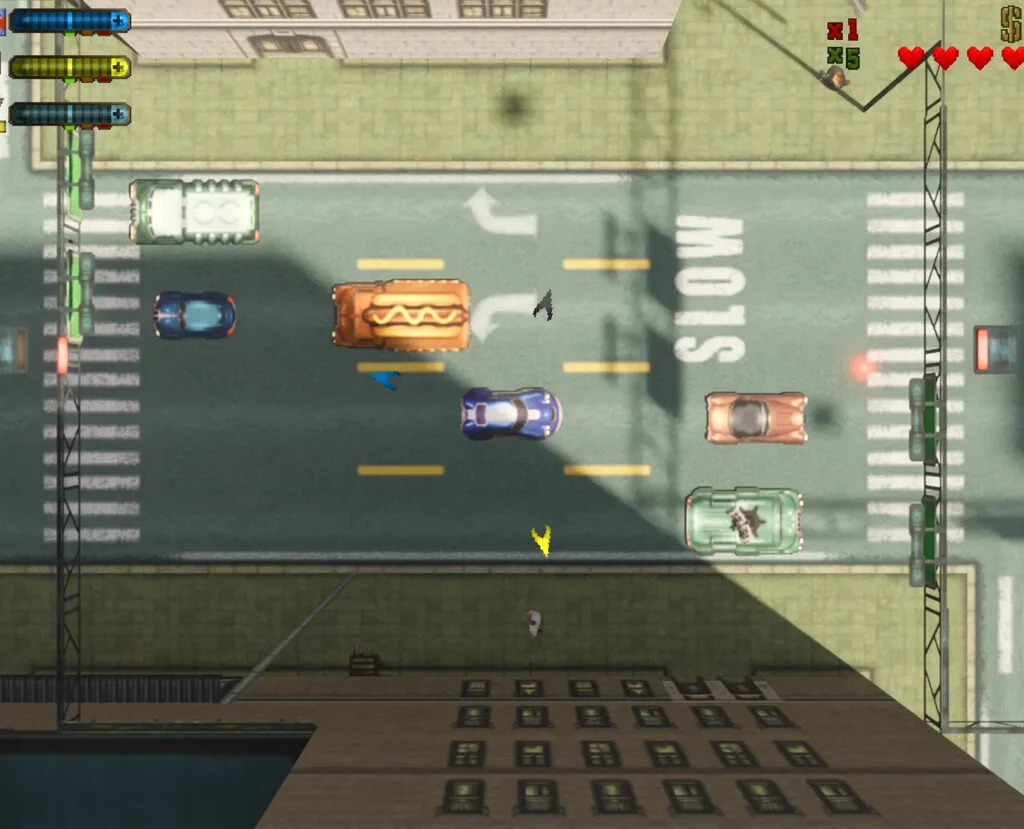
Police pursuits show how a small system can make the world feel responsive. Officers can chase the player and try to cut off a route at an intersection. Changing cars after killing pursuing officers doesn’t always end the danger: another patrol that witnessed the crime may pick up the chase. By modern standards, the AI can be easy to exploit, but its persistence can still disrupt a plan and provoke mistakes.
That’s the point. The city doesn’t need elaborate scripting for every surprise. A few interacting rules can make the player feel that actions have consequences, even when those consequences aren’t part of the mission briefing. GTA 2 gives those collisions between systems a rough, unpredictable edge.
What has aged, and what hasn’t
The overhead camera is the most immediate obstacle for a modern player. It suited the game’s era and gave a broad view of the action, but it also keeps the player at a distance from the world. Pursuits and shootouts lose some immediacy from above, especially beside the closer perspectives that define later entries.
Progression can be just as unforgiving. Losing accumulated cash after a run of successful jobs stings, and repeated missions can make a setback feel like a demand to replay familiar content. That grind may have fit the expectations of its time, but it can make the loop wear thin when failure sends players back over the same ground.

Still, the game’s rough edges make its design history clearer. GTA 2 mixes side activities into its central loop and lets the player’s choices produce unscripted complications. Later games had more room to make those systems feel varied and connected, reducing the sense of repetition without losing the freedom to cause trouble. Anywhere City is an early, imperfect version of that approach.
The series’ humor is already present, too. Mission briefings use puns and references, and bits of dialogue give the criminal routine a comic slant. That tone would develop alongside the games’ larger worlds, but the foundations are visible here, alongside a city defined by player freedom and streets that can react in unexpected ways.
GTA 2 doesn’t hold up evenly as a game to play today. Its camera and setbacks can feel dated, and its mission variations have limits. Its more enduring value is as a compact example of the systems that give Grand Theft Auto its character: jobs that encourage exploration, factions that make choices matter, and a city where a minor mistake can become the story. That’s a useful starting point for judging how GTA 6 will carry the formula into Leonida.

Discussion
Sign in to join the discussion.