June's industrial production showed marginal growth below expectations while employment figures align with consensus, indicating mixed economic signals.
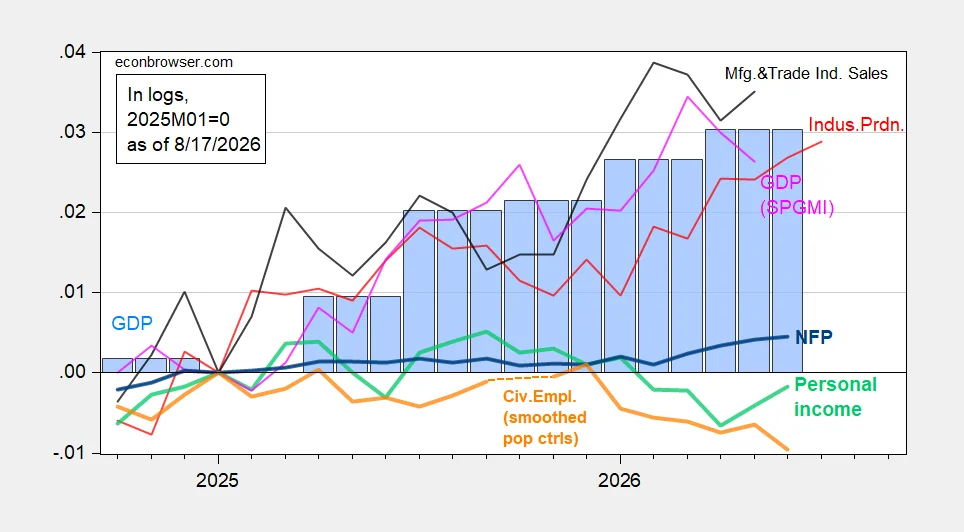
Industrial production for June rose by 0.2% month-over-month, falling short of Bloomberg’s forecast of 0.3%. This result indicates a nuanced situation in the manufacturing sector, which is closely watched as a barometer of overall economic health. While manufacturing output did meet market expectations, it benefited from an upward revision of the previous month’s figures, highlighting the often unpredictable nature of economic data revisions. This persistent growth in output suggests that productivity gains are outpacing employment increases, raising questions about the sustainability of such a trend.
Understanding Industrial Production Trends
When we talk about industrial production, we're essentially examining the real output of the manufacturing, mining, electric and gas utilities, and certain other industries. This metric serves as a direct reflection of how much these sectors are actually producing, offering insights into overall economic activity. The fact that the growth rate of industrial production fell short of expectations, albeit slightly, is significant. It can indicate underlying weaknesses that may not immediately impact the broader economy but can suggest potential challenges ahead.
In many cases, industrial production reflects broader economic trends. As countries navigate varying levels of demand—whether domestically or overseas—production will follow suit. An increase in industrial output typically signifies higher demand and improved economic conditions, but when it lags behind predictions, that raises red flags. Investors and policymakers alike often take such discrepancies seriously, as they could foreshadow stagnation in consumer confidence or industry investment.
The Employment vs. Productivity Paradox
This persistent growth in industrial output, juxtaposed with the reality that employment growth is not keeping pace, points to a somewhat paradoxical situation. Businesses appear to be extracting greater efficiencies from their existing workforce, thereby enhancing productivity without necessarily hiring more employees. This scenario can be a double-edged sword. For one, companies are improving their profit margins through this efficiency; on the other, it raises concerns regarding long-term employment prospects and wage growth for workers.
If you're working in this space, you might recognize this situation as reflective of a broader trend where technology and automation reshape the workforce. Such changes can lead to a disparity between job creation and economic productivity. More often than not, automation and technology enhancements result in fewer jobs being created, prompting a more aggressive look into labor market policies aimed at addressing the potential fallout. Furthermore, if productivity consistently outpaces employment, it could state a troubling pattern for overall economic health, leading to questions about consumer spending and the potential for increased income inequality.
Shifts in GDP Forecasts
The GDPNow model currently predicts a quarterly annualized growth rate of 4%. This figure, while optimistic, must be weighed against the more conservative estimate of 2.3% from Goldman Sachs. What’s particularly telling is the downward revision of “core GDP,” representing final sales to private domestic purchasers, now adjusted from an earlier prediction of 3.9% down to 2.6%. These changes are an illustration of the volatility in economic forecasting, depending on variable inputs and external conditions such as global economic influences, supply chain disruptions, and consumer behavior shifts.
The GDP estimates matter, too. The “core GDP” is crucial for understanding the real health of the economy since it eliminates the impacts of inventory changes and focuses more on end-user consumption. Such revisions are common, but substantial changes often trigger reassessments of monetary policy and fiscal measures. Policymakers rely heavily on these figures to determine the necessity and type of interventions that could bolster economic conditions. If economic activity doesn't align with high growth forecasts, that could prompt caution in areas like interest rate adjustments.
Comparative Economic Indicators
Figures like the ones illustrated in graphical data usually tell a more nuanced story than raw numbers alone. For example, while industrial production is just one cog in the broader economic wheel, its correlation with other indicators—employment figures, consumer spending, retail sales—can provide valuable insights into national economic health. In times past, periods of declining industrial production often coincided with economic recessions or other financial downturns, making this data worth tracking over time. As illustrated by the juxtaposition of civilian employment against manufacturing figures, it is urgent to examine these relationships carefully.
In the given figures, we can see the acknowledged complexities of economic indicators. They don’t always tell you what you think they do at first glance. Pay attention to fluctuations; they may signal shifts that could ripple across various sectors. The adjustment in expectations regarding core GDP is particularly illustrative of this phenomenon—reminding us that reliance on over-optimistic forecasts can lead to volatility.
Future Implications and Significance
The implications of these recent data points are manifold and warrant careful consideration. Ongoing productivity improvements alongside stagnant job growth suggest a need for comprehensive policy discussions. In an economy where technology is rapidly advancing, governments may need to pivot toward enhancing workforce skills to match evolving demands. Without such initiatives, we run the risk of creating a permanent economic divide whereby a segment of the population is continually left behind.
Moreover, as forecasts bounce around—such as the optimistic outlook of 4% annual growth possibly being capped by cautious revisions—investor sentiment may sway dramatically based on these outcomes. This demands a risk-aware approach to investment and business strategy, as market dynamics can change rapidly based on these economic indicators. Companies need to remain agile, ready to pivot strategies based on fluctuating growth trajectories.
In short, what stands out here is the unpredictable nature of economic indicators, a reminder that while data can provide guidance, it’s the interpretation of that data that plays a pivotal role in shaping responses. This is more significant than it looks. As the economy evolves, keeping a pulse on these metrics remains vital for businesses and policymakers alike.
Discussion
Sign in to join the discussion.