A 13-year-old Miltonduff single malt links its fruity sweetness and spicy finish to Kenshin’s gentle nature and assassin past. Just 225 bottles were made.
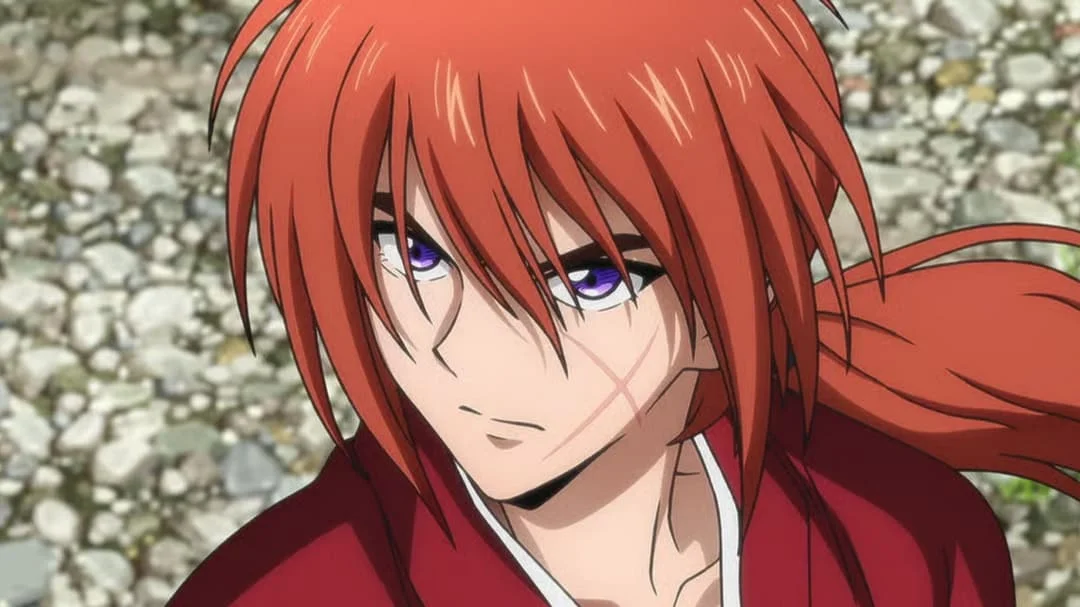
A whisky release built around Kenshin’s divided identity
The most interesting part of this Rurouni Kenshin tie-in is how closely it connects the whisky to Kenshin’s two selves: the gentle wanderer and the feared assassin. It’s a limited run, but the character concept gives it more thought than a label swap. That distinction matters in a merchandise category where a familiar face on a bottle can do most of the selling, while the product itself has little to say about the story it borrows.
Anime-themed drinks have become a familiar kind of merchandise. Recent examples include a premium sake collection based on Steins;Gate and a honeyed wine inspired by Tokai Teio from Umamusume. Rurouni Kenshin, the popular 1990s anime, now joins that line with a Scotch whisky release. The choice of whisky gives the tie-in a different tone from a character-themed sweet or ready-to-drink beverage: it asks the buyer to consider flavor, strength and serving style as well as the artwork.
That’s the pitch, at least. A character reference can make a product feel considered, but it can’t tell a buyer whether the whisky suits their taste. Here, the tasting notes and high bottling strength offer more concrete points of comparison than the franchise branding alone.
Fruit, sweetness and a sharper finish
The official Whisky Mew listing describes a Miltonduff single malt distilled in 2012, aged for 13 years and bottled at 58.6% ABV. Its label brings Kenshin Himura together with Sanosuke Sagara, Kaoru Kamiya and Yahiko Myojin. The listing identifies the whisky and its strength, while the character lineup makes the bottle read as a group tribute rather than a portrait focused on Kenshin alone.
Whisky Mew describes fruit notes recalling grated apple and ripe plum, followed by a mild sweetness and malt. The retailer reads that opening as a nod to Kenshin’s compassion and his vow to never kill again. Chili-like spice and a warming finish supply the harder edge, evoking the strength behind his former identity as Hitokiri Battosai.
This is more significant than it looks for a character-led release: the flavor description gives the concept a structure. Fruit and sweetness are associated with Kenshin’s restraint, while the spice and warmth suggest the force he keeps in check. That’s an effective piece of product storytelling, though it remains the retailer’s interpretation of the whisky rather than an independent tasting assessment.
At 58.6% ABV, this is a high-proof bottling, so the suggested serving options matter. Fans can drink the whisky neat or over ice; adding water is said to soften its spice. The listing doesn’t say how much water to add, leaving that choice to the drinker. If you’re working through a whisky at this strength, small adjustments can change how its aromas and alcohol heat come across. And this is the part most people overlook: the serving note doubles as character framing, turning a practical choice into another reference to Kenshin’s two sides.
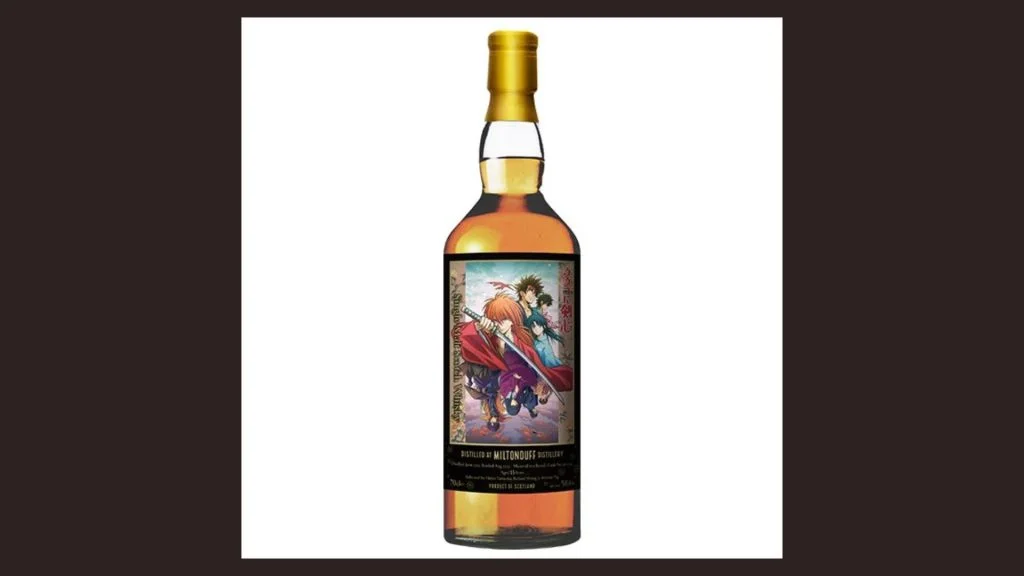
There’s also a period link. The story takes place in the Meiji era, when whisky was first officially imported into Japan. That connection gives the Scotch choice a historical association with the setting, though the listing doesn’t claim that this particular bottle reflects the era’s drinking culture. A thematic link, then, rather than a detailed historical recreation.
A small release, with a lottery in Japan
Just 225 bottles were made. Of those, 116 are set to be offered in Japan through a lottery starting September 9, 2026. Each 700ml bottle is priced at ¥22,000, or about $141. The lottery format makes access uncertain for buyers in Japan, and the limited allocation gives the release the character of a collectible as much as a drink. The details provided don’t say where the other bottles will go.
The numbers here are underwhelming for anyone hoping for broad availability: even the stated Japanese allocation is small, and the source gives no route for buyers elsewhere. That said, scarcity alone doesn’t establish quality. The more persuasive case for this release is the combination of a defined whisky profile, a strong bottling strength and a character concept that relates to the tasting notes.
For fans, the price and availability will likely shape the decision as much as the flavor description. The listing offers enough information to understand what’s being sold, but not enough to compare the whisky with other bottlings or judge how the finished spirit tastes in practice. A carefully matched theme can make a bottle memorable. It can’t settle the question of whether the whisky itself is worth the asking price.
What the tie-in says about character merchandise
This release shows how licensed drinks can move beyond printed artwork when they connect product details to a story’s central tension. Kenshin’s divided identity gives the retailer a ready framework for describing fruit, sweetness and spice, while the Meiji-era setting gives the Scotch another point of association. The approach is coherent, even if the evidence for the whisky’s quality remains limited to the listing’s own description.
If whisky isn’t your thing, Umamusume has also released a vodka lemon sour inspired by the fan-favorite horse girl Vodka. That contrast points to the range of formats anime merchandise can take: a high-proof single malt aimed at whisky fans, or a flavored drink tied to a character. In both cases, the franchise supplies the hook; the product still has to make sense on its own.
Discussion
Sign in to join the discussion.