Despite a general aversion to modern architecture, contemporary bridges often receive acclaim for their beauty—what explains this phenomenon?
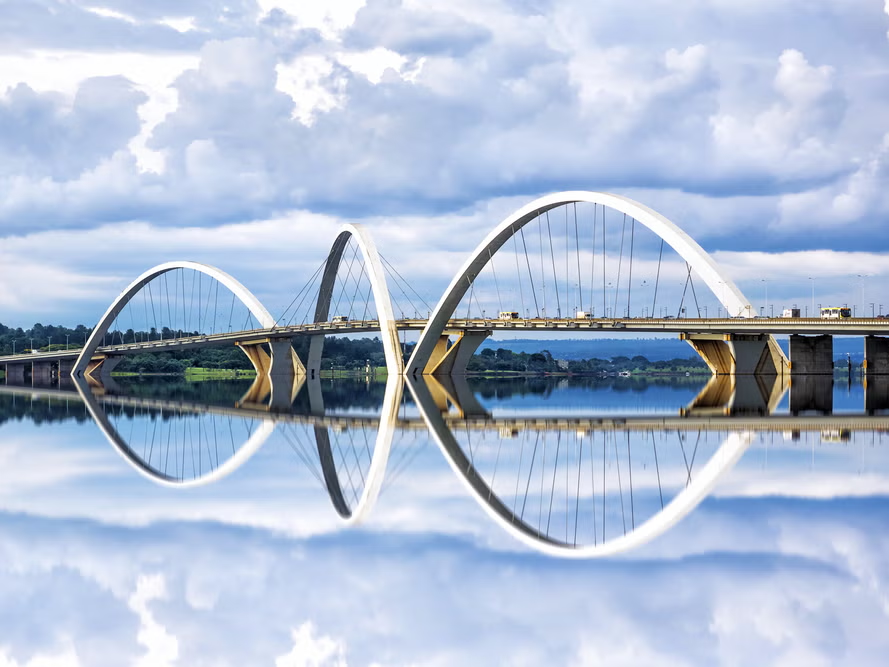
Public sentiment leans against modern architecture, yet modern bridges frequently defy this trend, garnering admiration instead. Renowned structures such as London’s Tower Bridge and the Brooklyn Bridge often share the spotlight with contemporary designs like Brazil's Kubitschek Bridge and Greece's Rio-Antirrio Bridge.
The Discrepancy in Perceptions
This draws attention to an intriguing reality within architectural critique: while modern architecture struggles with acceptance, modern bridge design doesn’t attract the same level of disdain. It raises the question: why is there this disparity? It seems counterintuitive that structures so frequently encountered in urban environments could inspire such different responses. After all, both modern architecture and modern bridges serve functional purposes within the built environment. But the perceptions are starkly different.
Engineering Influence on Design
One compelling theory suggests that the architects behind bridges are predominantly engineers, hailing from technical backgrounds rather than traditional architectural schools. This engineering influence may inherently shape bridge designs towards aesthetic appeal, as principles like catenaries and arches naturally lend themselves to beauty through structural form. The fact that these professionals often prioritize function over form can yield results that resonate positively with the public. After all, bridges aren't just paths; they're impressive feats of engineering that often become landmarks.
However, such an assertion raises another question: do engineering principles inherently lead to aesthetically pleasing designs, or is this just an exception rather than the rule? Look at the iconic Golden Gate Bridge with its Art Deco detailing; it marries function with style effectively. The engineering behind it is impressive, yet it’s the visual impact that truly captures the imagination. This aspect may not be as pronounced in buildings, where more subjective and creative interpretations of style often clash with public opinion.
The Aesthetics of Bridge Design
Of course, not all bridges are visually appealing; it’s possible to create unattractive designs. It’s easy to dismiss bridge aesthetics as secondary in discussions that typically highlight functionality and safety. Yet, the visual presence of a bridge can influence both traffic patterns and the perception of surrounding developments. For example, an analysis of bridges featured in Wallpaper magazine—a periodical focused on architecture—reveals that many lauded by its editorial team lack beauty. This divergence from public favorites offers a stark contrast worth exploring; how can so-called experts favor designs that the masses deem unsightly?
Such a disconnect might stem from differing criteria. Critics often appreciate avant-garde or abstract design that challenges conventions. This contrasts with public preferences that often lean towards more classical and familiar aesthetics, such as sweeping arches or intricate details. Look at the ongoing debates about high-rise buildings that attempt to drastically redefine skylines; the reactions tend to oscillate between admiration and disdain. Bridges, though often equally modern, tend to sidestep this contentious critique thanks to their clear utility.
Furthermore, it’s essential to acknowledge that many people associate bridges with travel and exploration—a hopeful journey—while buildings might evoke feelings of confinement or urban sprawl. The psychology of space plays a significant role here; bridges connect rather than divide.
Samuel Hughes' Argument
The enduring beauty of many modern bridges supports the argument advanced by Samuel Hughes, which contends that unattractiveness in design often stems from choice rather than limitations imposed by engineering. This perspective opens avenues for dialogue regarding what design choices truly resonate with the public. Are we witnessing a flourishing of ideas in bridge architecture that simply hasn't translated to buildings? That could imply a rich field of inquiry for architects and societal stakeholders alike.
When architects adopt an engineering mindset in their design decisions, it doesn't negate creativity; rather, it fosters a type of innovation that the general public can appreciate. And more than that, it indicates that there is a pathway to exist comfortably between aesthetic and functional imperatives in architecture.
Implications for Architecture as a Whole
What this means for you, whether you’re an architect, engineer, or simply interested in urban design, is significant. As cities evolve and the need for public infrastructure grows, understanding public sentiment around design choices becomes paramount. The admiration for modern bridges can inform approaches in building design that appeal to broader communities, bridging the gap between avant-garde creativity and everyday functionality.
There’s also an economic implication here; as cities invest in infrastructure, understanding public preferences could lead to choices that foster civic pride, attract tourism, or bolster local economies. Imagine if municipal leaders could effectively harness the apparent affection for bridge designs to garner support for urban renewal projects. The connection is clear, but the strategy could be more nuanced.
And yet, amidst the discussion lies a fundamental truth: aesthetic appeal isn't solely subjective. It’s an intersection of function, culture, and public perception. The enduring admiration for modern bridges highlights a key lesson in design philosophy; beauty can exist hand-in-hand with purpose if we’re open to the possibilities.
The post Why Aren’t Modernist Bridges Awful? appeared first on Marginal REVOLUTION.
Discussion
Sign in to join the discussion.