Sunny Lab blends pastry making, everyday witchcraft and emotional storytelling in The Witch’s Bakery, with influences from Ghibli, Persona 5 and Treasure Planet.
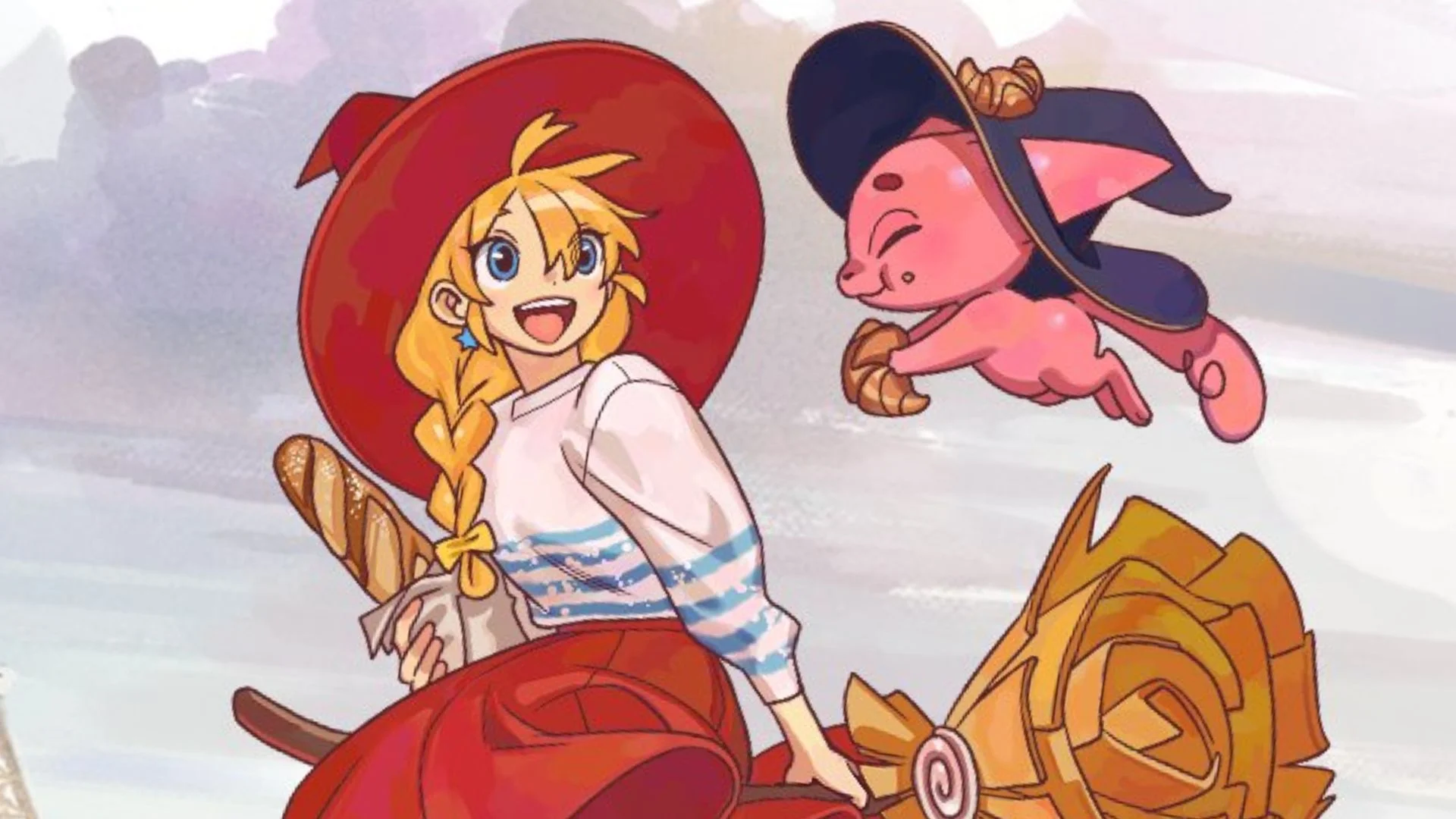
The Witch’s Bakery uses a familiar cozy-game setup—an inviting shop, a memorable companion and a city full of people to meet—to make emotional care part of its play. Sunny Lab’s Charlotte Gailledreau, the game’s co-founder and creative director, describes a story about helping people face feelings they’ve kept buried, told through baking, friendship and a gently magical version of Paris.
That balance is central to the game’s identity. Its Heart Palaces and supernatural creatures give the story an imaginative edge, while its everyday routines keep the world grounded. Gailledreau says the team wanted to address subjects including burnout, loss and mental health without giving up humor, warmth or small moments of happiness. The result, in the team’s view, is still a cozy narrative adventure.
Witchcraft in everyday life
Kiki’s Delivery Service helped shape the game’s mood, but its influence reaches beyond the look and feel. Sunny Lab was drawn to the film’s young witch putting her abilities to work for other people, as well as its themes of growing up, finding a place in society and experiencing burnout. Those ideas informed a world where witches are unusual but not supernatural outsiders: Gailledreau compares their place in society to that of astronauts.
That premise brings practical questions with it. How do witches live among people without magic? What do they do with their abilities? In Sunny Lab’s imagined world, those questions sit beside the charm of the witch archetype. Lunne’s work at the bakery gives her a way to help people, while the story considers what happens when serving others becomes difficult.
The team also looked to Persona 5, particularly its companions and the personal spaces known as Heart Palaces. But Gailledreau says the game’s everyday scenes mattered just as much as its supernatural set pieces. The appeal lies in watching extraordinary events fit around ordinary routines. Sunny Lab wanted magic to feel like something that belongs in daily life, so players could settle into the world rather than treat it as a sequence of fantasy spectacles.
A hat that signals the game’s promise
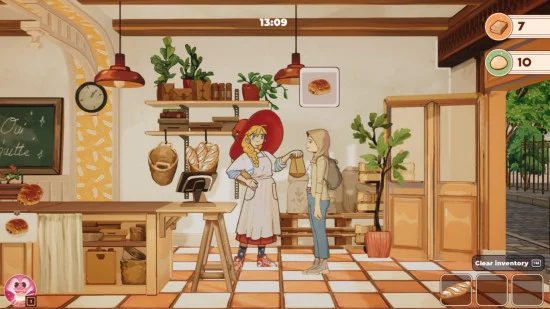
Lunne’s distinctive hat came out of discussions between Gailledreau, co-founder and narrative director Hugo Sahuquet, and concept artist Gary Vanaka. Vanaka proposed the croissant-shaped detail that became part of the character’s signature look. The hat itself prompted a broader conversation: witches in the game can come from anywhere, while the pointed hat is a strongly Western image.
The team kept it because it makes the fantasy legible at a glance. In Gailledreau’s words, the combination points to “Paris, baguettes, and witches!” It’s a compact visual cue for the particular world Sunny Lab wants to build: recognizable, playful and rooted in a French setting, while leaving room for witch characters with different backgrounds.
The game’s cozy tone also has a deliberate purpose. Gailledreau says the team wanted to approach serious emotional subjects in a gentler way, without suggesting that the subjects themselves are trivial. Simple, approachable gameplay supports that aim. The mechanics are meant to carry the narrative, not make difficulty the main event.
Regrets give hidden feelings a shape
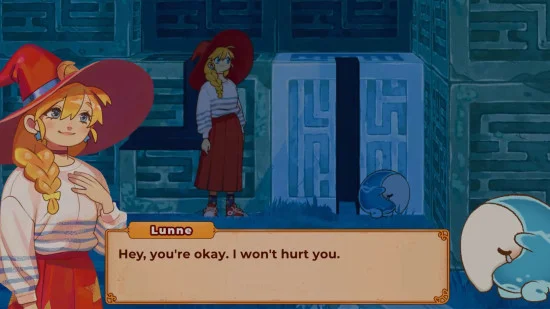
The game’s spectral creatures, called Regrets, make emotional repression visible. They come from the Aside, a magical world connected to the human one, and feed on feelings that people suppress instead of expressing. They can delay an emotional crisis, Gailledreau explains, but they can’t stop it from eventually surfacing.
That role gives the creatures a purpose beyond adding unusual silhouettes to the cast. A Regret accompanying someone signals that something is wrong, even if that person hasn’t said so. Smaller creatures help establish the idea across the world, while the Regrets tied to the central characters in each chapter grow larger and take on different forms. Their changing size reflects the burden of the feelings their companions have been holding in.
The emotion creatures found inside the Heart Palaces follow a separate visual logic. Sunny Lab linked emotions to colors and elements—sadness, for instance, connects with blue and water—then worked to make each creature recognizable among the other beings in those spaces. After many design iterations, the team settled on long-nosed figures wearing masks. Gailledreau was especially interested in the image of a mask taking form around a repressed feeling: something hidden becoming physically present.
Orio’s shape has a personal story
Lunne’s floating companion Orio may read as a pink witch’s cat, but that isn’t quite the character’s identity. Orio is a Morph, a creature that can take different shapes. In its natural form, the character recalls Morph from Disney’s Treasure Planet, a film with a personal connection to Sunny Lab’s founders.
Gailledreau and Sahuquet were already fans of the animated movie when they first spoke. Their conversation about it helped spark a friendship, years before they founded the studio together. Orio became a way to nod to the film that brought them together. Gailledreau adds that a Morph’s natural form is a little like being unclothed, which is why Orio adopts another appearance. The character probably wouldn’t call themself a cat.
Pastries beyond the game
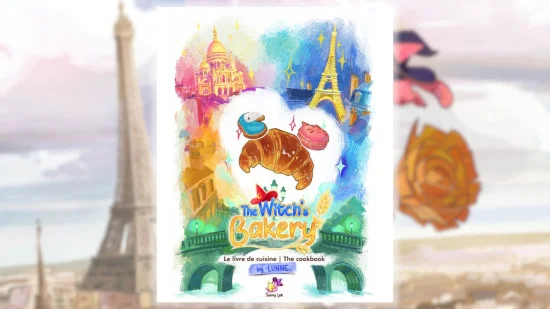
Sunny Lab has promised Kickstarter backers a cookbook, artbook, original soundtrack, postcards and stickers. Gailledreau says those rewards are in production, with delivery planned before the end of the year. If players respond to the game and its world, the studio hopes to make the items available to a wider audience. She also floats the possibility of an Orio plush or other collectibles, while making clear those ideas remain hopes rather than announced products.
The team’s favorite pastries offer a small taste of the French food culture that frames the game. Gailledreau picked a chocolatine; Sahuquet chose a chausson aux pommes. The rest of the team named pain au chocolat, kouign-amann, pastel de nata, pain aux raisins, fougasse with bacon and cheese, pain suisse, petit pain, canelé and cookies. Two team members also chose chausson aux pommes.
The Witch’s Bakery is available on Nintendo Switch and Switch 2, and is verified for Steam Deck. Its strongest idea is the way it ties the cozy pleasures of a bakery to the harder work of noticing what people feel. If Sunny Lab’s world lands with players, the studio’s next challenge will be letting more people spend time in it—whether through the promised cookbook and artbook or simply another visit to Lunne’s shop.
You can also browse this indie game selection.

Discussion
Sign in to join the discussion.