The Surprising Role of Feces in Earth's Evolution and Ecosystem Development
Written Sep 06, 2026Audience 761Author Callum Doyle
Research reveals that fossilized feces significantly contributed to the emergence of complex life on Earth by enriching ecosystems with essential nutrients.
Unpacking the Role of Feces in Earth's Evolutionary Leap
Research recently published in *Trends in Ecology & Evolution* highlights an astonishing finding: a surge in the release of fossilized animal feces may have played a pivotal role in the rapid emergence of complex life on our planet. This new insight reshapes how we think about crucial events in Earth's biological history, inviting us to reconsider what factors contributed to significant evolutionary milestones. The discovery is compelling, especially when you think about the broader implications—how something seemingly mundane could have driven biological innovation.
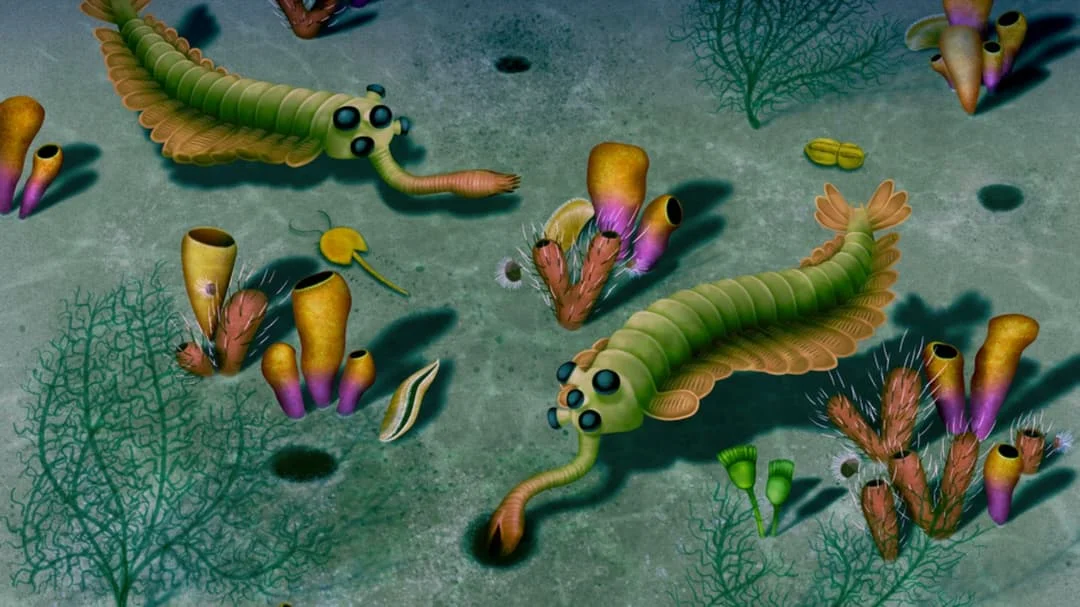
Leading the study, Dr. Russell Bicknell, alongside an international team from Australia and Germany, embarked on an analysis of coprolites—fossilized excrement—from 35 geological deposits around the world. Their findings trace back over 600 million years, pinpointing a critical transition period roughly between 600 and 500 million years ago. This timeframe coincides with the emergence of most major animal groups we recognize today. That’s no coincidence; the interplay between biological evolution and ecological dynamics is often more interconnected than initial observations might suggest.
The Impact of Evolving Digestive Systems
In a far simpler geological past, marine organisms lived without an anus, which drastically limited their feeding efficiency. These early creatures had to regurgitate food through the same opening they ingested it, severely constraining their growth and ecological potential. This single entrance and exit system was a major bottleneck in terms of nutrient processing, essentially making it a challenge for these organisms to thrive.
The shift to a more complex digestive system—where food and waste are processed separately—was revolutionary. Such evolutionary advancements enabled early arthropods to develop sophisticated digestive systems capable of processing a variety of food sources. With this change, once animal waste began to sink to the ocean floor, it carried critical nutrients like carbon, nitrogen, and phosphorus into deeper waters. This nutrient cycling not only fertilized habitats but also triggered rapid growth in organisms, effectively kickstarting whole new ecosystems.
Bicknell emphasized the significance of these findings, highlighting that, “Alongside increasing oxygen levels, the role of feces in ancient ecosystems is often overlooked.” His assertion challenges the traditional focus on atmospheric factors as the primary drivers of evolution. The changing dynamics of feeding and nutrient recycling contributed significantly to the environmental conditions that led to the flourishing of diverse life forms. What this means for you, if you're working in this space, is that we may need to rethink how ecological changes are interconnected with evolutionary advancements.
What’s especially intriguing here is how researchers previously attributed the Cambrian explosion primarily to atmospheric changes—rising oxygen levels, the emergence of the ozone layer, and geological upheavals. While these factors are undoubtedly significant, Bicknell's team posits that the abundance of waste also creates the nutrient-rich conditions essential for life. (And this is the part most people overlook.) The analogy to modern agricultural practices is telling; just as fertilizers boost crop production today, the copious amounts of organic material and nutrients deposited into ancient oceans fueled biological diversity and the complexity of life.
Revisiting Conventional Wisdom
The implications of this research go beyond a simple academic curiosity. It prompts a reevaluation of long-standing theories surrounding early life forms. Traditionally, academics have given precedence to abiotic factors when explaining the rapid advancements in biological diversity. What if we’ve been looking at it all wrong? The focus on feces as a catalyst for ecological improvements suggests a parallel between biological evolution and the underlying environmental shifts that support it.
Moreover, the research raises questions about what other overlooked factors might be significant in the long history of evolution. Are there other biological processes, seemingly trivial in nature, that warrant deeper inquiry? This study suggests a pathway to understanding complex evolutionary mechanisms that intertwine organism behavior with environmental health.
Future Outlook: A New Angle on Environmental Interactions
As scientists continue to investigate the intricacies of Earth's biological past, findings such as these urge us to reconsider broader implications of evolutionary changes in feeding behavior. The intertwining of dietary advancements and ecological consequences serves as a potent reminder that even what we dismiss as trivial—like feces—can have profound impacts on the development of life.
Looking ahead, this line of inquiry could lead to significant shifts in how we study past ecosystems and their development. It signals a potential for a more nuanced understanding of the interactions between biological processes and environmental factors, particularly as we face contemporary challenges like climate change and habitat loss. Embracing a multi-faceted approach—bringing together geology, biology, and environmental science—could unlock new insights that have implications far beyond the historical narrative.
This study may be a singular piece of research, but its ripples could influence various fields, leaving us to wonder what else we might unearth if we follow these lines of thought. As we peel back the layers of ecological history, perhaps we’ll find that the most unremarkable elements of nature are often at the heart of its most significant transformations.



Discussion
Sign in to join the discussion.