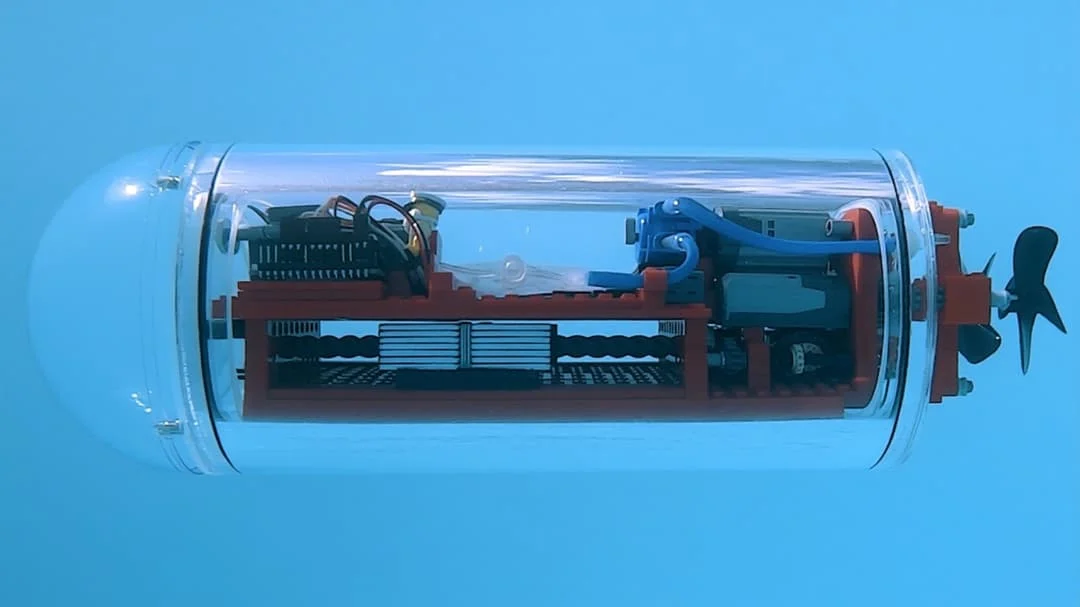
A YouTuber has taken an impressive leap in Lego engineering by crafting a fully functional submarine designed to navigate underwater. Weighing in at 6.5 pounds, this remarkable creation integrates advanced Lego Technic components, representing a significant engineering feat. This isn’t just a whimsical toy; it’s a sophisticated radio-controlled vessel designed to explore the depths of both pools and rivers—territory typically reserved for professional engineering.
The mastermind behind this creative project is the Brick Experiment Channel, a creator that has dedicated years to developing various iterations of this homemade submarine. The effort is not just about building; with each new iteration, enhancements are methodically integrated. The latest version, known as Submarine 5.0, has successfully navigated the challenges posed by fast-flowing river currents and calm swimming pools, showcasing not just creativity but also impressive technical skill.
This journey is fascinating because it intersects multiple fields. Engineering, robotics, and even marine biology come into play when trying to understand how a mechanical structure can withstand underwater pressure while maintaining buoyancy. With Submarine 5.0, the creator isn't just playing with toys but is engaging in a complex dialogue about design, function, and aquatic exploration.
Advanced Engineering Techniques
Among the most noteworthy features of Submarine 5.0 is its advanced depth control system. Previous models relied on a rudimentary piston mechanism to manage buoyancy, a method that’s not only outdated but also limited in its effectiveness. This version takes a leap forward, employing a modified peristaltic pump that fills a specially designed 50 ml IV bag for buoyancy adjustments. This thoughtful design not only optimizes internal space but also allows for more effective ballast distribution, enhancing overall operational capabilities.
The flexibility inherent in the IV bag functions effectively as a ballast system, a clever approach considering that ideal buoyancy is critical for underwater navigation. Builders have ensured this integration doesn’t compromise other functions vital for underwater maneuverability. New enhancements have made the most of the available internal space; a pitch control system now comes into play. Weighing a total of 3 pounds, tungsten pellets move along a motorized track, shifting the submarine’s center of gravity with precision. This technical improvement allows for rapid adjustments to the pitch, enabling quicker ascents and descents underwater—a marked enhancement compared to older iterations.
In a significant upgrade, Submarine 5.0 has also switched from using the Raspberry Pi Zero that powered older models to an Arduino Nano ESP32 microcontroller. This change is crucial for anyone familiar with robotics; it dramatically heightens the submarine's responsiveness and control capabilities while submerged. A six-axis gyroscope, pressure sensor, and 40MHz radio receiver combine to improve performance and tracking accuracy, paving the way for a more engaging and effective underwater exploration experience.
And here's the thing: while previous flat-front designs faced stability issues at higher speeds, this latest build features a rounded nose measuring 4.72 inches, engineered specifically to mitigate sideways veering. This adjustment allows for streamlined movement through water, enhancing performance during testing phases where stability can be fragile.
To put those innovations to the test, Submarine 5.0 underwent rigorous pool trials, but the real benchmark was its ultimate challenge: a river run. Successfully completing an underwater mission at depths of about 4.9 feet, even against a formidable current, showcases the effectiveness of its design.
Broader Implications for DIY Engineering
This ambitious project extends far beyond mere hobbyist fun—it's a microcosm of community-driven innovation. The Brick Experiment Channel isn't alone in its pursuit of pushing the boundaries of what's achievable with Lego. Other creators in this vibrant community are stepping up to the plate, similar to Bricked MC, who previously stunned audiences with a promise to recreate the sprawling map of Grand Theft Auto 5 using an astonishing 76,000 Lego bricks.
What this means for you, if you're involved in DIY engineering or the creative use of tech and building blocks, is that this wave of experimentation signals something much larger than individual projects. It suggests a community eager to redefine what’s possible in construction and design—not just as a pastime, but as a genuine platform for engineering skills.
There’s a cultural shift happening here. People are increasingly looking for ways to blend creativity with practical engineering solutions. They want to create, experiment, and share their findings, ultimately leading to collective growth in the community. It’s clear that Lego offers more than just building blocks; it serves as a canvas for exploration, knowledge-sharing, and even education.
As we look ahead, this trend could have meaningful implications for education in engineering disciplines. If you’re a student or professional in this space, keep an eye on these projects. They’re not merely entertaining; they’re redefining the frameworks of learning and innovation that young engineers can adopt.
Sure, it’s just a Lego submarine. But it represents a much larger shift toward hands-on learning, encouraging people to tackle complex problems in a tangible way. So, what’s next? The possibilities are endless, and the creative spirit fueling these developments is just getting started.



Discussion
Sign in to join the discussion.